
Staying cohesive through long and complex Parkinson’s disease trials
Parkinson’s disease trials, like most clinical trials, are rarely a straight path from start to finish. Protocols evolve, real-world conditions change, operational realities require adapting, and every small decision can affect the quality and reliability of results.
One constant? The need to connect with the people behind the trial.
At Rho, the Cohesion Effect ensures alignment exists between patients, the Parkinson’s community, and the teams conducting the trial—an alignment that is crucial in studies that typically take years to complete. This creates the consistency needed to maintain forward progress, especially as complex clinical dynamics unfold over time.
See how Rho’s approach makes all the difference in Parkinson’s disease research.
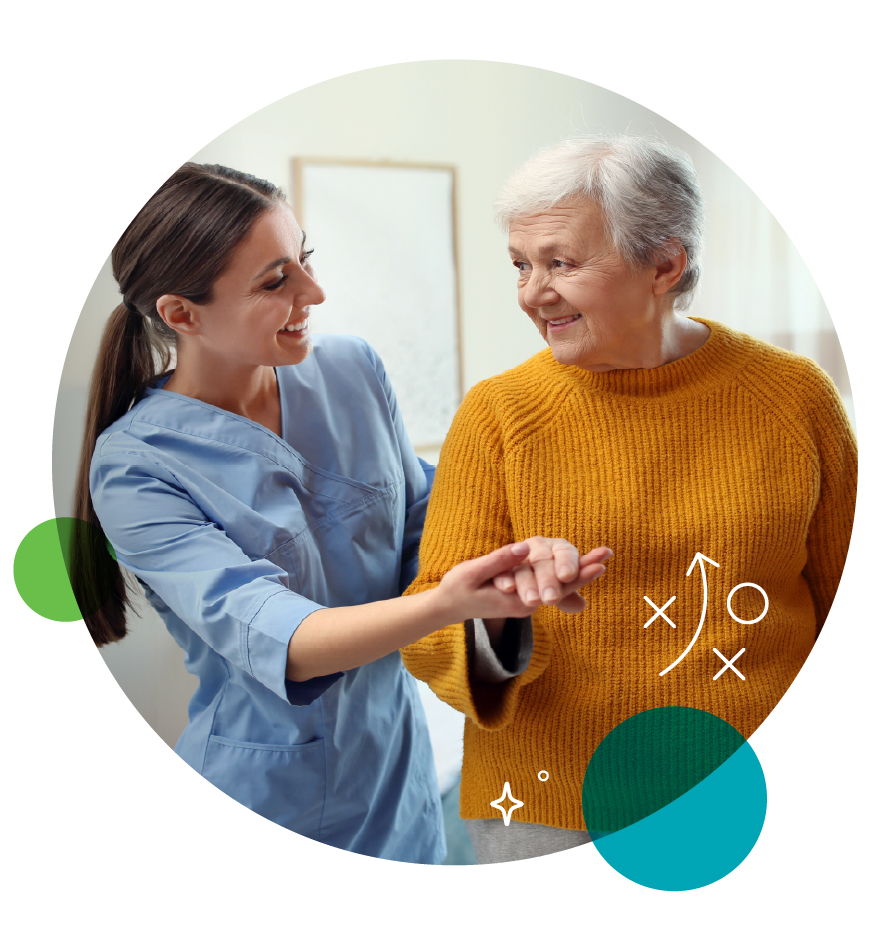
Alignment with patients’ reality
Parkinson’s disease research is fueled by extraordinary people: those living with the disease and navigating its uncertainty every day.
Participating in a Parkinson’s clinical trial is not a passive commitment; the decision is deeply personal. Patients aren’t blind to the challenges involved. They’ve been watching the progression of research for years, so they know the odds they’re facing. Yet they choose to show up anyway, putting themselves forward because they believe in advancing science and the need for continued medical progress.
That means arranging transportation to and from appointments when driving is no longer an option for them and sitting through hours of tests at a clinical site, sometimes with significant discomfort. Though these trials may not offer participants a cure, patients choose to endure this physical toll for a different kind of return—a chance to generate the knowledge that may alleviate their symptoms and perhaps spare future generations from facing the same diagnosis and uncertainty.
But patients don’t walk this path alone. Behind every patient are families and caregivers who keep all the pieces moving, building their lives around a calendar of appointments and providing the emotional support patients need to make participation possible.
Because they all give so much of their lives to advance research, we have a responsibility to build trials that treat their time, energy, and trust as the precious resources they are.
THE COHESION EFFECT reduces unnecessary burden and makes participation as manageable as possible. That means providing concierge services, using in-home visits or remote monitoring to minimize travel, reviewing protocols to ensure schedules are feasible for patients and caregivers, and eliminating any cost barriers that limit participation. It’s about creating an environment where patients feel valued rather than managed—which starts with an experience that is consistent and respectful from their first clinic visit to their last.
Alignment with the community
Long before a protocol is written and the first site is activated, there’s a tight-knit Parkinson’s community that’s already hard at work. It’s been built through years of studies, shared experiences, advocacy efforts, site relationships, and patient trust.
Within this ecosystem, investigators share breakthroughs and lessons learned across academic centers and consortia; sites balance the demands of research while acting as lifelines for exhausted families; and advocacy groups support patients while serving as the connective tissue holding the entire network together.
The reality is that sponsors, CROs, and trial partners are stepping into a network where reputations carry weight and trust is hard-earned. The community is protective of its patients, which means sponsors and CROs need to earn confidence before they’re fully trusted.
That’s done by clearly communicating expectations, timelines, and the “why” behind any requests made, consistently monitoring and resolving issues without surprise demands, providing user-friendly tools and processes that streamline work rather than complicate it, and respecting site realities such as staffing, patient flow, competing studies, and administrative load.
Building credibility takes time, but it’s achievable when you recognize you’re joining a powerful movement far larger than any individual study—and when you deliver in the moments that matter.
THE COHESION EFFECT is our way of working with sites, sponsors, patients, and each other—real collaboration that goes well beyond the standard “we’ve got this” kind of support. It’s doing the little things like taking the time to translate protocols into clear guidance so that everything runs more smoothly, or giving sites direct answers without forcing them to wait on a single decision maker to make a call. It takes a willingness to build relationships within the ecosystem where Parkinson’s trials succeed.
Alignment across internal teams
Parkinson’s trials demand more than strong planning; they require strong execution. As research partners, it’s our job to bridge that gap, especially as real-world dynamics start introducing friction—which happens even with the best-laid plans.
That’s because in Parkinson’s research, trials rarely fail in a big, dramatic way. They fail in subtle ways—often from problems that are lurking beneath the surface. It could be from small inconsistencies with site raters, the challenge of figuring out whether a drug is masking symptoms or actually slowing disease progression, academic sites that are overworked and stretched too thin, or patient and caregiver fatigue that manifests during long, complex trials.
Preventing these things from snowballing into bigger issues takes an entire team operating in sync. You can’t rely on a single person tucked away in a silo. Knowledge and responsibility must be shared broadly. It’s a partnership mindset grounded in the belief that everyone is part of a shared operating team.
THE COHESION EFFECT pulls clinical operations, statisticians, and regulatory experts into the same room from day one—not to put out fires after they’ve already started, but to predict where the sparks will land over the course of a trial. That way, small inconsistencies don’t compound over time and momentum is never lost. It also builds collective experience across teams, because when you share valuable, hard-won lessons from past trials, every team member knows what to look out for in the next one.
Parkinson’s disease trials require alignment among patients, the research community, and trial teams—and that’s how Rho’s operating model makes a difference.
For us, alignment is the thread that ties every part of a study together. We build it in from the start with the Cohesion Effect, and those connections are what allow us not just to navigate challenges, but to turn them into opportunities for breakthrough therapies.
If you’re preparing for a Parkinson’s trial, it’s worth asking: Are you aligned?
Use our Parkinson’s Disease Trial Readiness Diagnostic to identify strengths, uncover gaps, and evaluate your readiness before the trial begins.